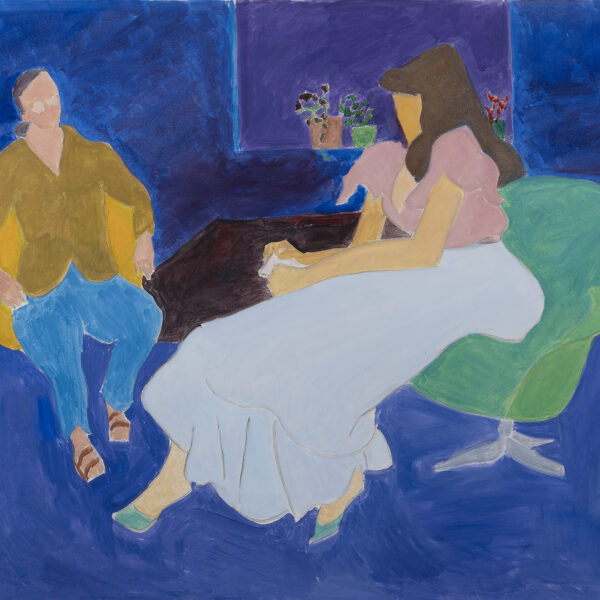
SALLY MICHEL AVERY (1902-2003)
A key figure in American modernism, Sally Michel (also known as Sally Avery) was a painter and illustrator whose life and work were deeply intertwined with that of her husband, renowned artist Milton Avery. Born in Brooklyn, Michel knew from a young age that art would be her life’s calling. She studied at the Art Students League in New York and began her career as a freelance illustrator, contributing to major publications like The New York Times and children’s books.
In 1926, Michel married Milton Avery, marking the start of a creative partnership that would last throughout their lives. The two artists shared a studio, critiqued each other’s work, and painted side by side, developing what would later be known as the “Avery style.” Although Sally largely prioritized her husband’s career over her own, it is widely believed that her influence shaped much of Milton’s work. According to a review by The New York Times critic Roberta Smith, “Without Sally Michel, there would have been no Milton Avery, or at least not as much.”
During the 1920s through the 1950s, Michel worked as an illustrator, often serving as the primary breadwinner, while Milton focused on his painting. Despite her commitment to family life and her role in promoting Milton’s career, Michel never ceased creating her own art. Her paintings, often small in scale, featured landscapes, still lifes, and figures characterized by rich, vibrant colors and a deep connection to the American modernist movement.
In their free time, the Averys traveled extensively, painting scenes from New England, Canada, Mexico, and Europe. Their circle of friends included notable artists like Mark Rothko, Adolph Gottlieb, and Barnett Newman, who were themselves influenced by the Averys’ unique style. Although Sally Michel’s work remained largely in the shadows during her lifetime, she has since gained recognition for her contributions to American art.
In later years, Michel’s work was included in several important exhibitions, and today, her paintings are part of prestigious collections, including those of the Metropolitan Museum of Art, the National Gallery of Art, and the National Museum of Women in the Arts. Michel’s paintings are celebrated for their expressive use of color, textured landscapes, and a keen sense of form, often in contrast to the more restrained works of her husband. While Michel was content to remain in the background during her life, her legacy as an artist in her own right continues to grow.